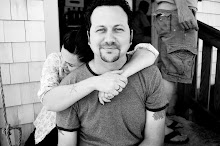
After showing up for work at a Garden District coffee shop at 6 a.m. to work the morning shift a couple of Saturdays ago, my friend Sam shook off his midday fatigue and rode his bike to City Hall to march in solidarity with the Occupy Wall Street movement. As the march proceded through the French Quarter, some visitors to our city were displeased with this particular attraction, yelling "Get a job," to Sam, who, among the hundreds of others in attendance, was holding a "We Deserve Better" sign and chanting "We are the 99%."
The implication of the heckling — that people only complain about the system because they are too lazy to make it work for them — has been proved false in the past two months of Occupy protests. Here in New Orleans and at "occupations" around the country, all kinds of hard-working people have shown up to air their discontent with the current state of affairs. The past few years of un-natural disasters and economic collapse have made it plain that millions of people who play by the rules, go to school, work hard, buy a home and try to grab on to their small piece of the America Dream, have lost to powers and circumstances far beyond their control despite their efforts. Go ask shrimpers and oystermen along the Gulf Coast (how their livelihoods fared) after the BP spill, anyone who bought a house in 2007 before the market crash, a recent college graduate searching for a first real job, or someone who has tried to get health insurance after surviving cancer.
http://www.bestofneworleans.com/gambit/perspective-occupy-new-orleans
I decided to go to Camp Eagle Hill for one more year. I was fourteen and had been going there for five years. I had been a little boy in the lower camp and then, nearly half a life later, I was one of the older kids, hanging around the Lake Side bunk house with David and Ian before heading out to play basketball or tennis or blow off sports altogether and hit frogs with our tennis rackets against Big Red, the gymnasium where we played deck hockey and had “Sing,” the final event of Color War.
I was too old for camp, really. I had become leery of Billy Joel, thought “Sing” was corny, and was developing a strong adolescent impulse against having things required of me. But camp was still a salve, a place where nothing went wrong beyond the occasional broken bone, and where I, like it or not, belonged. The camp plaques in the dining hall proved it. There I was, Billy “The Gangster of Love” Sothern, among the campers in the “Fly Skimmers,” in Hill Top 6, summer of 1987. There again, Billy “Southern Comfort” Sothern, in Club Clueless in Hill Top 8, the following summer, and so on. People were not suspicious of me here, unlike in my new hometown, where an eighth-grade curiosity about marijuana and huffing Scotchgard had gotten me a reputation for being a “druggie.”
For this reason, when our counselor’s money went missing—a couple hundred dollars in tips from a recent parents’ weekend—no one suspected me, though we were all certain that one of the boys in the bunk had taken the money. Our counselor, Brian, devised the kind of justice that makes sense only at camp, and demanded that we all gather a hundred yards away from the cabin. He explained that he did not want to know who took the money. He only wanted it returned. He said that each of us would go back to the cabin, enter it, spend a minute inside, and return, and he asked that the person who took the money use this opportunity to return it to a drawer in his music-cassette storage box. We all agreed.
To read the rest of this piece, please purchase this issue of the Believer online or at your local bookseller.

By Billy Sothern, The Lens contributing opinion writer |
On September 10, 2009, my wife Nikki was at her midwife’s office hoping to get some indication that our baby – four days past due – would come soon, ending her mounting pain and discomfort.
It wasn’t until Nikki got back from her appointment that I saw the possibility that my daughter could be born on September 11, the eighth anniversary of the attacks on the World Trade Center and the Pentagon. Nikki told me that a woman we had met in our birthing class had been at the midwife’s office as well. And though she was a full week past due, fixing to burst and desperate to have her baby, she had postponed her induction because she didn’t want her child born on such an inauspicious date.
I had moved to New Orleans from New York City a month before the attacks; family and friends worked in the financial district, fast by the Twin Towers, and my father and step-mother were on New York bound-flights that fateful morning. And so the date – 9/11 – was likely to be forever etched in my mind as a day of horror and anxiety, made only worse by its exploitation as a pretext for war and the curtailment of civil liberties.
But my wife was in agony so I quickly reconciled to the idea of our child sharing her birthday with that mournful American anniversary. When I got home in the late afternoon, Nikki’s labor had become much more pronounced. We left for the hospital a little after midnight.
In the birthing room, I tried my best to comfort Nikki during her ordeal, playing Bach’s Cello Suites and Nikki’s favorite arias from the St. Matthew Passion on the little stereo she had bought for this purpose a couple of weeks earlier, when it all seemed so distant and theoretical. At a certain point, she began to seem really focused, in a distant place all by herself, and I started playing Philip Glass’s Solo Piano Works. She had speculated days earlier that Glass’s familiar, round, cyclical musical forms might reach her at a time like this.
When that selection ended, with Nikki clinging to my shoulders and neck from her birthing tub but still, evidently, hours away from delivering the baby, Addy, our doula, asked what we should put on. I told her that there was an opera by Philip Glass on the iPod, and that it was long enough to keep us from having to change the music again. “Satyagraha?” she asked. I hadn’t remembered the name. Without even glancing at the liner notes, I had burned it onto my computer, from the New Orleans Public Library’s music catalog a few years earlier. In the scores of hours I had spent listening to the opera, its music and Sanskrit libretto, though unintelligible, seemed truer to life and the thoughts passing through my mind than any music I had heard before. “That’s it,” I told Addy.
It begins with a low voice and a deep stringed instrument that wound around the room. Sometimes urgent, sometimes slack, at times the music almost disappeared into the rhythm of Nikki’s contractions and then her pushing. When the baby’s head finally emerged and then I held her against my fatigued but triumphant wife, the final act of Satyagraha pulsed in the background, and then stopped, unnoticed.
I sent news to our friends and loved ones by text, “Rose Mae Sothern born at 4:57. I am in awe of mother and child.” I consciously omitted the date, not wanting to associate the sad anniversary with the miraculous birth of my daughter.
But as time passed, and I was able to spend hours and then days with this new life, it became clear to me that it was seemly and even necessary, for Rose, and others, to have been born on this date, for things to occur that could create new anniversaries that might someday eclipse the tragedy. I sent out another email, this time owning the date: “Rose Mae Sothern was born at 4:57 a.m. on Friday, September 11, 2009, weighing in at 8 lbs., 10 oz., and altogether transforming the meaning of that date in our history for me.”
I got a response from Rebecca Solnit. I had met her when she visited New Orleans while researching her book, A Paradise Built in Hell, on the magnanimity of people in the face of disaster. She pointed out that September 11, 2001, had been, for the most part, “a day that people behaved beautifully under the most extreme circumstances in New York City, millions of them in contrast to the 19 who sought to destroy.” But she made another observation, which gave rise to a sense of wonder, beauty, and synchronicity that tempts me to believe the world is not simply spiraling meaninglessly but instead is ordered, even blessed. She told me that September 11, 1906, is the day that Gandhi began to harness non-violence as a tool against oppression in South Africa, a method of resistance called “satyagraha,” a Sanskrit word meaning “the Force which is born of Truth and Love or non-violence.”
Without any of us knowing it, Nikki labored and Rose was born on the anniversary of satyagraha, to the rhythms and sounds of an opera that Philip Glass wrote in honor of Gandhi and a vision of social justice through non-violence.
As my daughter’s second birthday approaches, and with it, this terrible tenth anniversary of a date that swallowed her birthday as its name, I do my part to remind people that as much truth and love exists on that day as any other. Approach me in the park, as she romps by, and ask me, “How old is that precious little girl?”
I will tell you, stressing the date, “She was born on September 11, 2009. So she’s almost two.” My hope is that you will see in her face that satyagraha exists – as it did in 1906 and, yes, 2001 – and that its power is undiminished.
Billy Sothern is a criminal defense attorney and the author of “Down in New Orleans: Reflections from a Drowned City.”
Nikki and I watched and enjoyed Woody Allen's new Midnight in Paris tonight, a film that plays with and examines the nostalgia that saturates so much of his work (and the imaginations of so many of his fans, myself included). The movie takes place in modern day Paris but the main character travels back to the Paris of the 1920's which he glorifies and loves from books.
The movie reminded me of a sketch from an old Woody Allen stand up record that I have, where Woody imagines himself hanging out with Hemingway, Gertrude Stein, and the "Fitzgerarlds." It is very clear to me that this 30 or 40 year old stand up routine is the germ of the idea that became Midnight in Paris. And its also just really funny.
We drank coffee, pop, and all kind of fruit juice that summer. The whole summer, that's what we had to drink. I found myself wishing the summer wouldn't end. I knew better, but after a month of being with Wes at Chef's house, I put my wedding ring back on. I hadn't worn the ring in two years. Not since the night Wes was drunk and threw his ring into a peach orchard.I guess its possible that I made up the other details, or filled them into my understanding of this moment in Carver's spare and brief narrative. Whether or not it was a conscious reference or a reference at all, I still regard the film as Carveresque, which is to say beautiful, true, and as sad as life.